As Philadelphia weighs school closures, civic leaders advise heeding lessons from past

City Councilmember Isaiah Thomas speaks at a March 24, 2026, Every Voice, Every Vote Community Conversation about education funding and school closures. CREDIT: Anthony Scott, Vision Tone Media LLC
For the second time in 15 years, The Philadelphia School District is looking to rightsize its building footprint to match an eroded student footprint. Civic leaders discussed ways to mitigate harm and prevent future closing rounds.
By Jared Council
Nearly 15 years ago, the Philadelphia School District closed more than 20 schools, a seismic decision that still reverberates in the lives of some Philadelphians today.
It's now undergoing a similar process to align its building footprint with its smaller student footprint. A recent panel of civic leaders—including recent school district teachers and students—said the school district should heed key lessons from the previous round of closures.
At-large City Councilmember Isaiah Thomas, a panelist and former teacher, said school closures are one of the few policy issues that residents never forget.
“So, the way for me to avoid coming back to this moment 10 years from now, is to be laser sharp focused on all the things [we should be] prioritizing and recognizing that this is about our legacy.”
He added: “I was a teacher when that happened. And I think about, what can we do to not get back to that moment?”
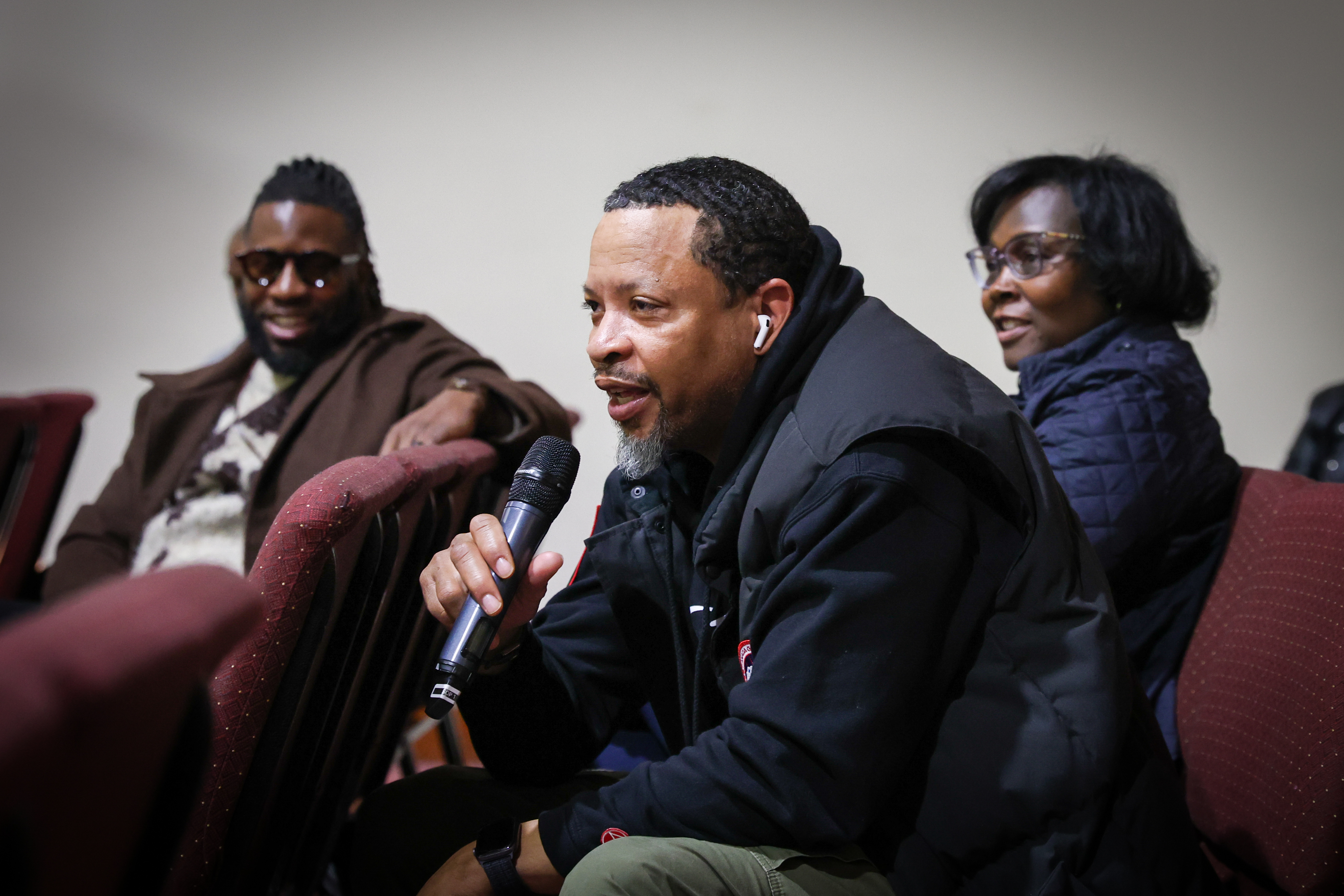
Thomas was among the panelists at last week's Every Voice, Every Vote's fourth installment of its Community Conversations series, which took place at Germantown SDA Church located in the northwest section of the city. It was moderated by Shania Bennett from the Mayor's Office of Youth Engagement.
Education was the theme for the March 24 event, and much of the discussion centered on the biggest education issue in the city: School closures. In January, the school district proposed a plan to, again, close 20 schools, though in February the district removed two schools from its proposed closure list.
The panelists debated how the district got here, but they also emphasized potential solutions for making this process better than the round of closures that took place in 2012 and 2013. Among the ideas: more transparency about decision-making, deep community listening about potential impacts, and structural reforms to address root causes driving the need for closures.
Declining student enrollment has left the School District with more big buildings than it needs, said Chalkbeat Philadelphia Bureau chief Carly Sitrin. The factors that led to that, including the rise of charter schools and declining birth rates, are impacting other cities as well.
Sitrin said the school district seems to have improved transparency in some areas. This includes acknowledging that in the last round of closures test scores declined for both relocated students and the schools that receive them. They’ve also been up front that the projected cost savings in that closure round never fully materialized.
“We're doing a better job of saying that part out loud,” she said. “Whether or not we will grapple with that in a real way remains to be seen, but I'm heartened, at least from a transparency point of view."
Councilmember Thomas said City Council doesn't have the power to determine which schools get closed—that's up to the mayoral-appointed school board. But it does have some influence through budget appropriations and other means. (School district officials are scheduled to appear before City Council on April 22 for an update on school closures.)
Tamir Harper, incoming executive director of Philly for Great Public Schools and former district teacher, said the previous round of school closures demonstrated the importance of considering student experience, workforce stability and plans for closed buildings.
“We learned a lot,” Harper said. “Now we just have to see if it will be a better result this time around. This is, sadly, not something we can avoid. It's just something that we can make sure we do ... close to right.”
He added that education and civic leaders should, more generally, think about making Philadelphia a place that “makes people want to stay and raise families.”
Niya Marrero, a panelist and former student at the now-closed Germantown High School, said decision-makers should not take lightly the impact of closed schools on a community. “I actually know what it means to say you will miss not having a high school reunion. You will miss not having a prom. You will miss never seeing the people that you got socialized with ever again because of decisions of adults,” she said.
Inella Ray, a director of parent advocacy & engagement with Children First, said years of chronic underfunding have been one of the biggest factors behind the need for this new round school closures. Funding impacts educational resources and outcomes, she said, which in turn can impact enrollment.
She said a landmark Pennsylvania Supreme Court decision in 2023 determined that the state had underfunded its public schools—including those in Philadelphia to the tune of $1.25 billion. That money is not all coming in a single year, Ray said, and even with a portion of it, the school district currently has a budget deficit of more than $300 million. A proposed ride share tax by Mayor Cherelle Parker could bring in about $48 million in the coming years.
"[That] is fantastic, but we have to do more,” Ray said, “And the more is going to come from, now, city council.”
Thomas said the city and the state each provide about $2 billion towards the school district, even though the U.S. Constitution says states are responsible for educating its citizens.
He said the city has a $400 million rainy day fund and a $1.2 billion fund balance, both of which are critical in an era of federal funding cuts. He said he’d entertain tapping the fund balance, which is akin to a checking account cushion, but only in an emergency. But a one-time infusion from the city is not going to solve the school district’s structural budget deficit.
“This isn't a current emergency. The emergency becomes adamant if the Harrisburg doesn't pass a budget like they did last year, and we have to crack the glass. We did it with SEPTA, and we can do it with schools.”